








Skip to content

Superconducting materials & devices

Superconductors, from the atom up.

We design superconducting materials and the processes that make them, test them in the lab, and take them to pilot production for AI, fusion, quantum, the grid, and medicine.

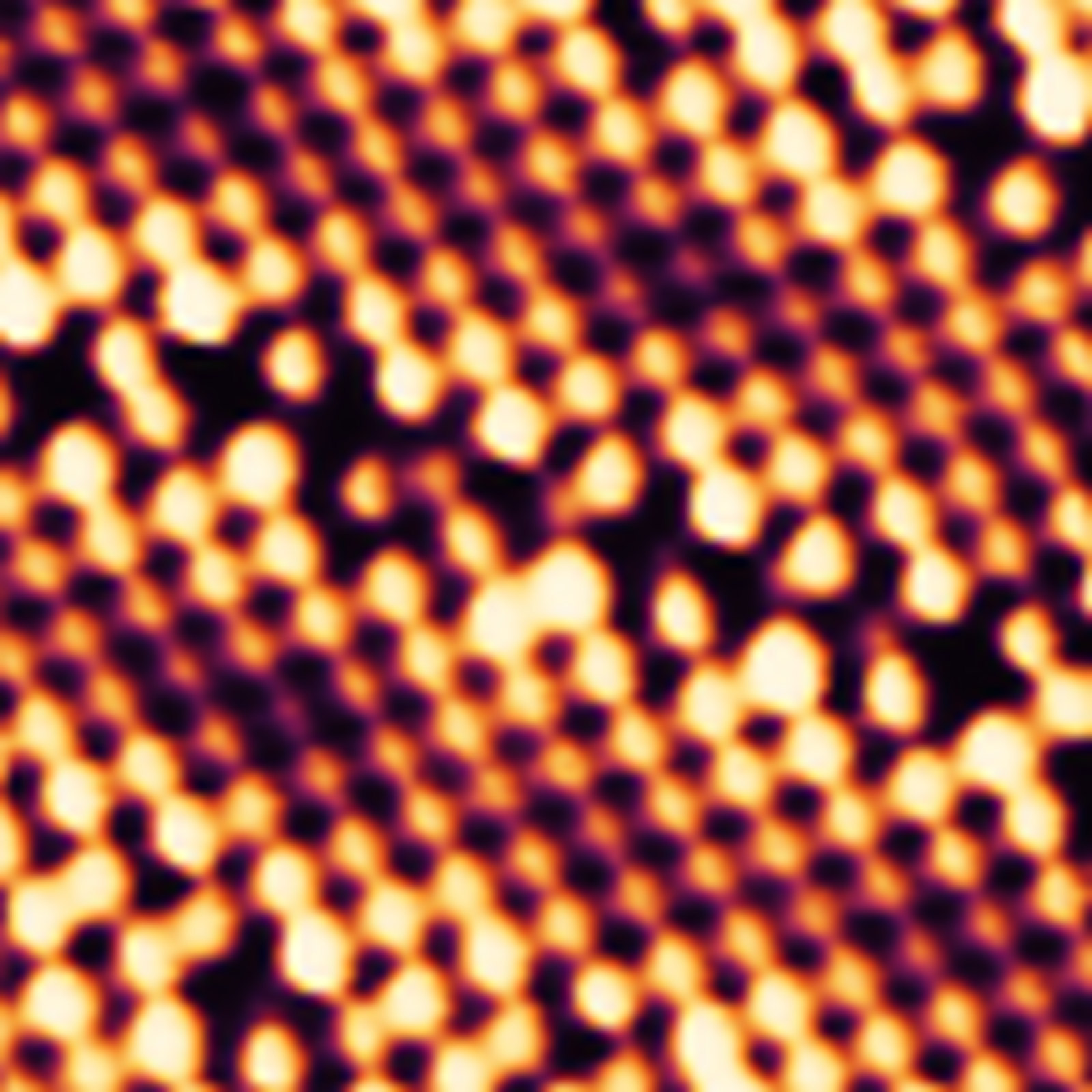
Individual atoms on the surface of a superconductor crystal, measured with a scanning tunneling microscope at Georgia Tech.

AtomsMeasured

Ceramic targetMaterial

Coated tapeConductor

Magnet coilComponent

Power cableSystem

The machineDevice

Atoms measured at Georgia Tech.

Who we work with

  • Lab work
  • UC Berkeley
  • QB3
  • BADASS Labs
  • Measurement
  • Georgia Tech
  • University of Illinois Urbana-Champaign
  • Brookhaven National Laboratory
  • Walther-Meissner-Institut
  • Materials and pilot production
  • CAN Superconductors
  • Eloi Materials
  • Programs
  • Plug and Play
  • Counsel
  • Wilson Sonsini
  • Our team comes from
  • Rigetti Computing
  • Karlsruhe Institute of Technology
  • MIT
  • Harvard
  • Illumina
  • HP
  • Georgetown Law
  • KOPEX USA
  • Hyunsung TNC

The platform

The search runs on GPUs.

AI agents and generative models propose the candidates, and GPU-parallel simulations test every one against the physics. Partners make and measure the top of the ranking, and every result retrains the models.

A representative search

candidate routes still standing · from 3,214,880

  1. FORMS A PHASE418,220
  2. STABLE AT 1 ATM62,140
  3. CARRIES Jc AT FIELD8,930
  4. SYNTHESIS ROUTE1,104
  5. COST PER kA·m143
  6. SCALES TO LENGTH12 worth making

These counts are representative, and six of the cuts are named.

  1. GenerateAI agents and generative models
  2. SimulateGPU-parallel solver sweeps
  3. RankProprietary ranking algorithms
  4. LearnLab results retrain the models
Inside the platform

Contours of a superconducting gap map, measured at Georgia Tech.

Where it goes

Five industries that need better superconductors.

The prize

Every superconducting machine is limited by how cold it has to run.

  1. 4 KLiquid helium
  2. 77 KLiquid nitrogen
  3. 135 KDurable recordHg-1223, 1993
  4. 293 KA warm room

158 K short of a warm room

Another research group set the 135 K record, at ambient pressure.

What a warmer superconductor changes

  • MRI needs no liquid helium.
  • Power cables cost far less to cool.
  • Fusion magnets shrink.
  • AI data centers move more power through less copper.

Business model

We earn from programs now and from royalties at scale.

Development programs pay us today, platform software licenses come next, and at scale we license the materials and processes we own.

  1. Development programs

    01Revenue today

    A fee per program.

  2. Platform licenses

    02Next

    A license per workspace.

  3. Materials and process licensing

    03At scale

    A royalty on every unit.

Schematic of the model, not a forecast.

Traction

Hardware teams already pay us.

Revenue
AIFusionQuantum
Paid programs running with AI, fusion, and quantum hardware teams
Deployed
CAN Superconductors
Live with CAN Superconductors today
IP
20+
Patents issued and pending
Materials
5
Proposed materials in synthesisEach is predicted to superconduct at 100 kelvin or higher, warmer than liquid nitrogen at 77 kelvin. None has yet been independently established as superconducting.

We have been making superconductors for three decades. What this search returns is a route our own line can run, with the numbers we would have asked for.

Jan PlecháčekCEO, CAN Superconductors

Team

Scientists and operators run the company.

Charlie Moon

Charlie Moon

Co-founder · Chief Strategy Officer

  • KOPEX USA
  • Hyunsung TNC

Charlie ran companies for twenty-five years, fifteen of them as chief executive of KOPEX USA, the cable-protection line ABB carries.

Davis Rens

Davis Rens

Co-founder · Chief Scientific Officer

  • Rigetti Computing
  • UC Berkeley

Davis was a quantum systems engineer at Rigetti Computing and earned degrees in Chemistry and Physics at UC Berkeley in three years, with Highest Honors.

James Kim, Ph.D.

James Kim, Ph.D.

Scientific Founder · MEL Theory

  • Karlsruhe Institute of Technology
  • Hyunsung TNC

James wrote the MEL framework, holds a Ph.D. in Chemistry from KIT, and is CTO of Hyunsung TNC.

What are you trying to build?

Tell us what your device needs and what is holding it back.

Investors: request the deck →
Precursor powders, where every superconductor starts, rendered